
April 2026
Our Finger Lakes Trout in the Classroom Program does more than just teach kids about trout. It connects kids to their local streams and the creatures that live in them, connects science and art, connects teachers with each other to develop experiential and place-based learning models, and connects community members of all ages.
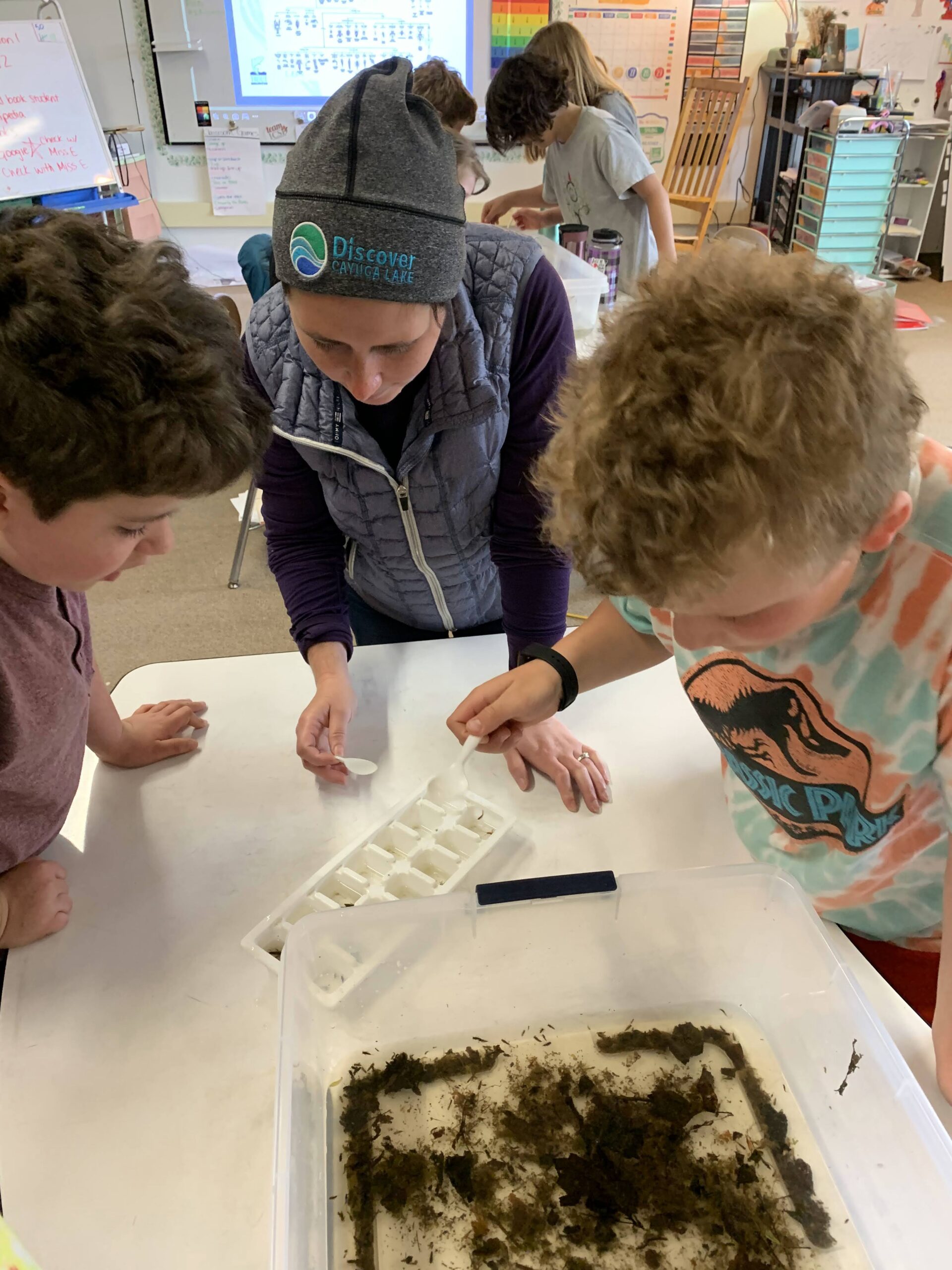
This year, we are pleased to have Olivea Nicholson join our team as DCL’s new Youth Education Coordinator. Olivea has been busy all year with the constant upkeep of the trout tanks and working with our TIC volunteers to visit the schools and educate the kids about the living trout they are now in charge of. She also wrote the blog below and has recently been found in streams collecting insects to take to the schools! Read on to read about the insights Olivea has learned over the last several months and to understand how the TIC impacts our watershed communities.
Connecting Kids to their Watershed
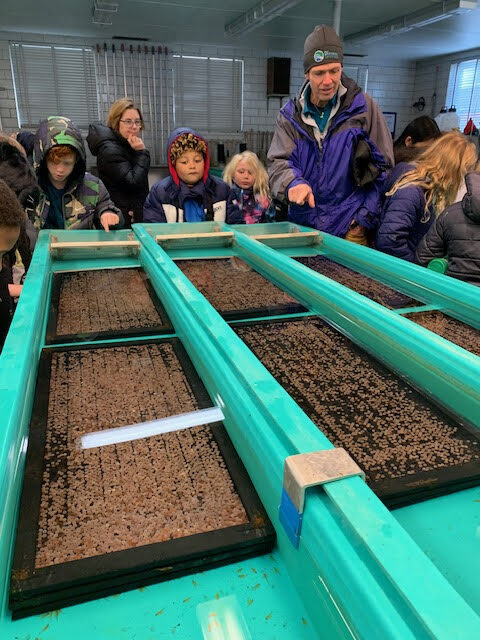
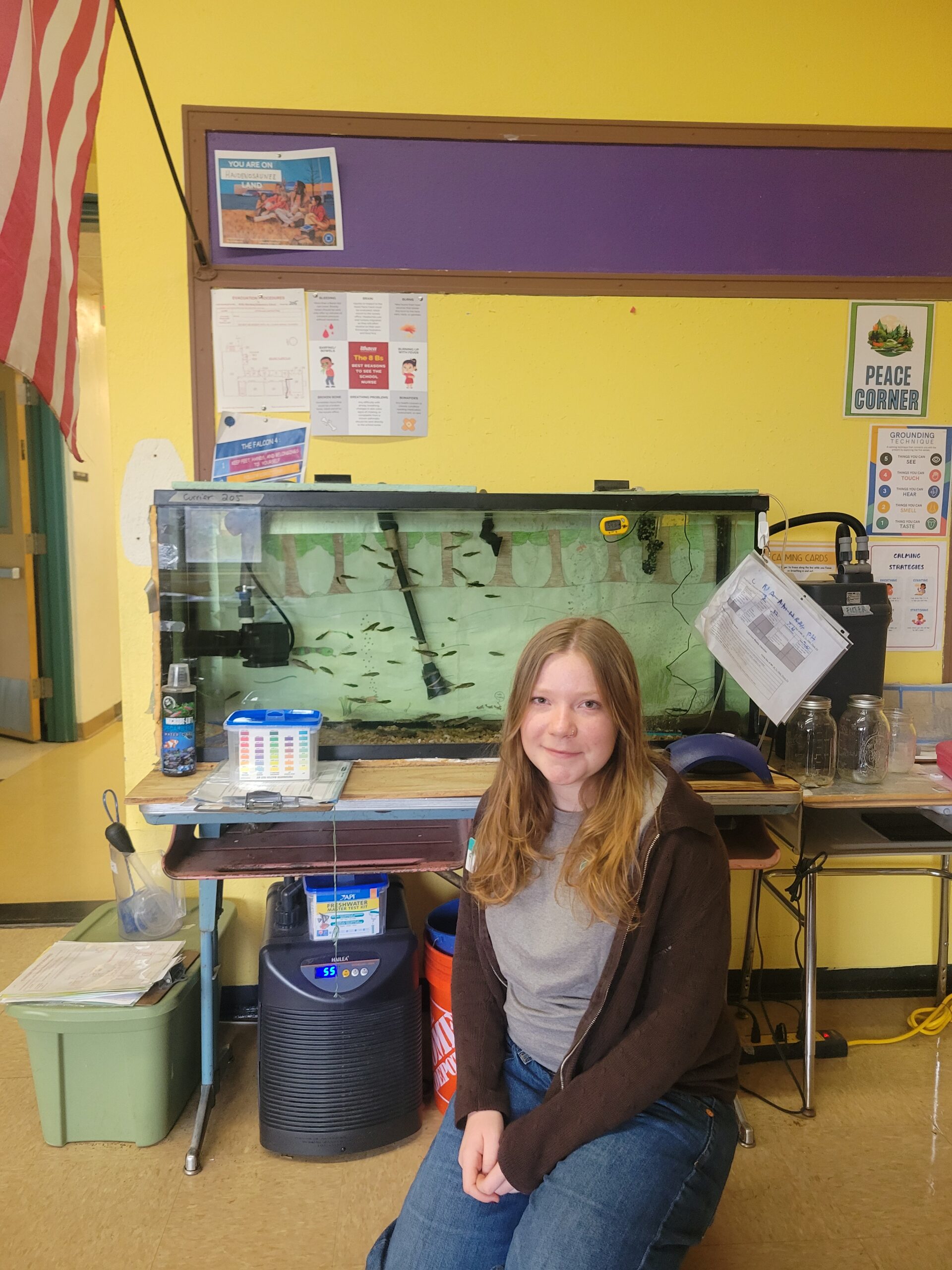
Olivea writes: “Nearly 20 schools participate in Discover Cayuga Lake’s Trout in the Classroom (TIC) program every year, but what does this really mean? Run through our local Trout Unlimited chapter, I set up 24 aquariums for the 2025-26 school year, ranging from Kindergarteners in Geneva to High Schoolers in Dryden. Their aquariums simulate a natural stream where they’ve been raising Brook and Brown Trout throughout the school year.
Starting as eggs in October, students have learned first-hand how to take care of their trout on a daily basis. Teachers are encouraged to include students in every aspect of the aquarium. This includes daily feedings, chemistry tests, and even water changes. Visual observations, like water clarity and trout behavior, are helpful indicators when coupled with finding pH, ammonia, nitrite, and nitrate. Not sounding so easy anymore? Students and teachers have been running tests for 6 months already! The care and energy for their trout helps students realize that, like a pet, trout eat, go to the bathroom, and like to be clean. I tell students “I’m the fun aunt, I visit once a month. Your class is responsible for all the things that keep the trout alive on a daily basis!”
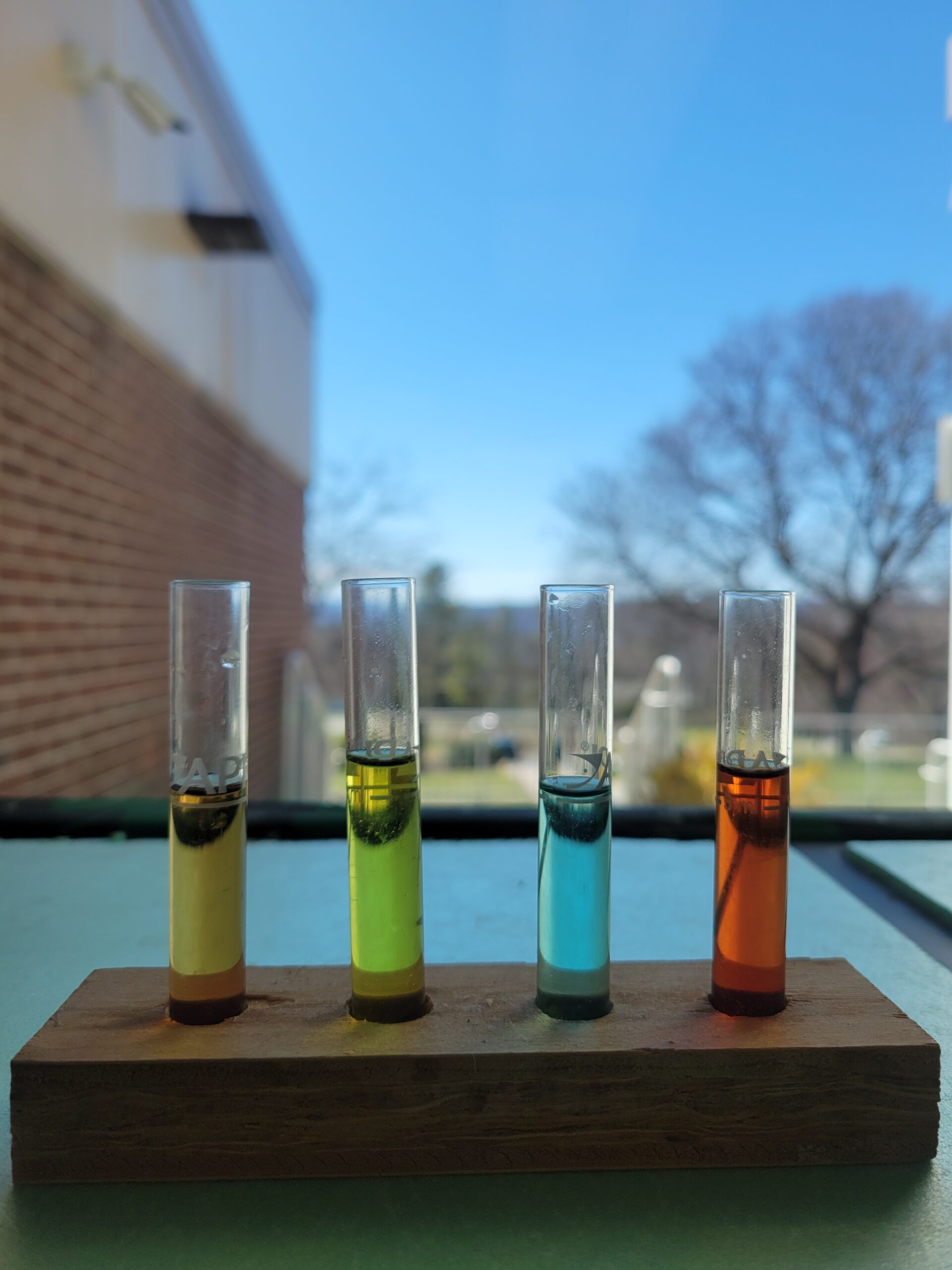
About once a month, the trout come out of the aquarium in beakers for experiments. How long are they now? Are they ready to eat live food? How do they breathe? These are all awesome student-asked testable questions! Trout in the Classroom fosters this scientific inquiry and gives students the chance to test and retest. Our January Live Food Experiment Lesson focuses on using the scientific method to hypothesize if our trout will be able to eat live food once released into the stream in May.
We teach them about the struggle for animals to survive in nature, including fungi, birth deformities, and fragile environments. As a result, students learn local ecological history, the characteristics of their local waterways, and how it translates into their classroom. They consider land changes, such as deforestation for farms and industry, and what that means for the temperature of the water, as well as pollution, and how we may glean water quality from chemistry tests.
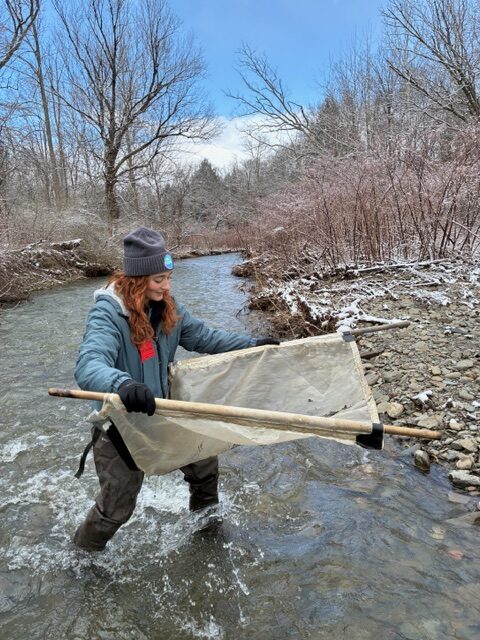
In our most recent lesson in March about Watersheds and Water Quality, some classrooms got the opportunity to explore community-science data from the Community Science Institute (CSI). Students learned about human impact on waterways and how community members collect data from streams in the Cayuga Lake Watershed, including the one they will release the trout into! After comparing data from their aquarium to the data at the stream, they shared how it compared to safe levels and how elements like Nitrogen enter water naturally and non-naturally.
Caring for live trout builds empathy and accountability, and encourages students to see themselves as caretakers of their local ecosystems. By connecting classroom learning to real-world conservation, TIC empowers students to make informed decisions and take action to protect freshwater resources in their own communities. I have run into many fourth graders anxiously awaiting 5th grade to be in the TIC program. I have even met a former student while at a conservation event!
Connecting Science and the Arts
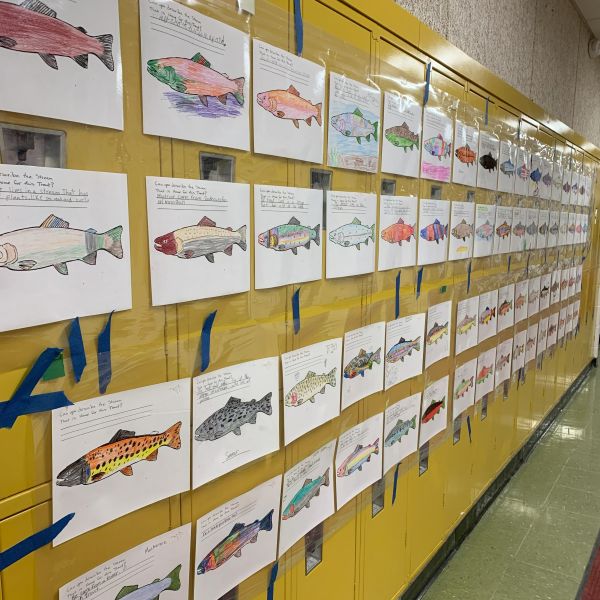
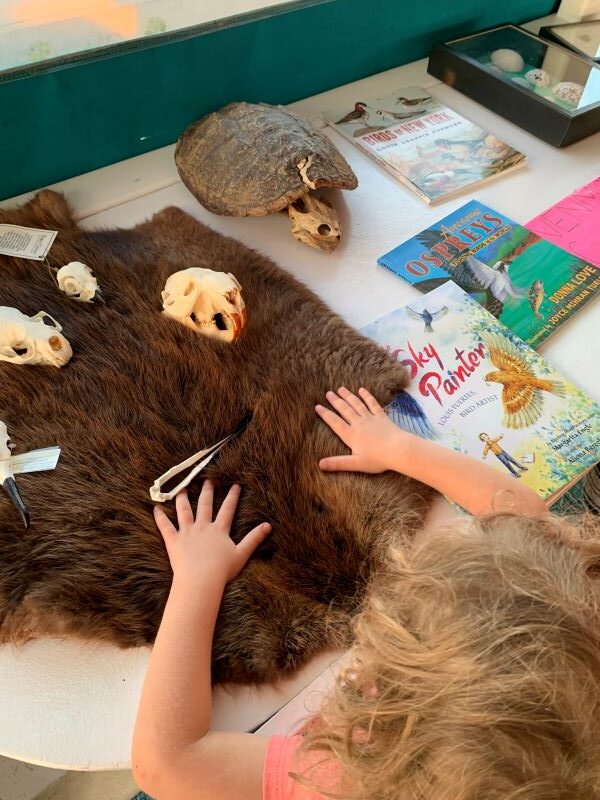
But it’s not all about science. The TIC program acknowledges how science intersects with other ways of knowing. Our December Camouflage Lesson gives students the opportunity to focus on art in nature. Specifically, how would a trout camouflage in a stream? Classes get to make color and pattern observations so their peers can guess the habitat based on the drawing. Scientific illustration is a tool for accuracy and creativity. TIC encourages students to observe while also expressing their own interpretations of the natural world. Through this process, we hope they see that careful observation and artistic expression are deeply connected.
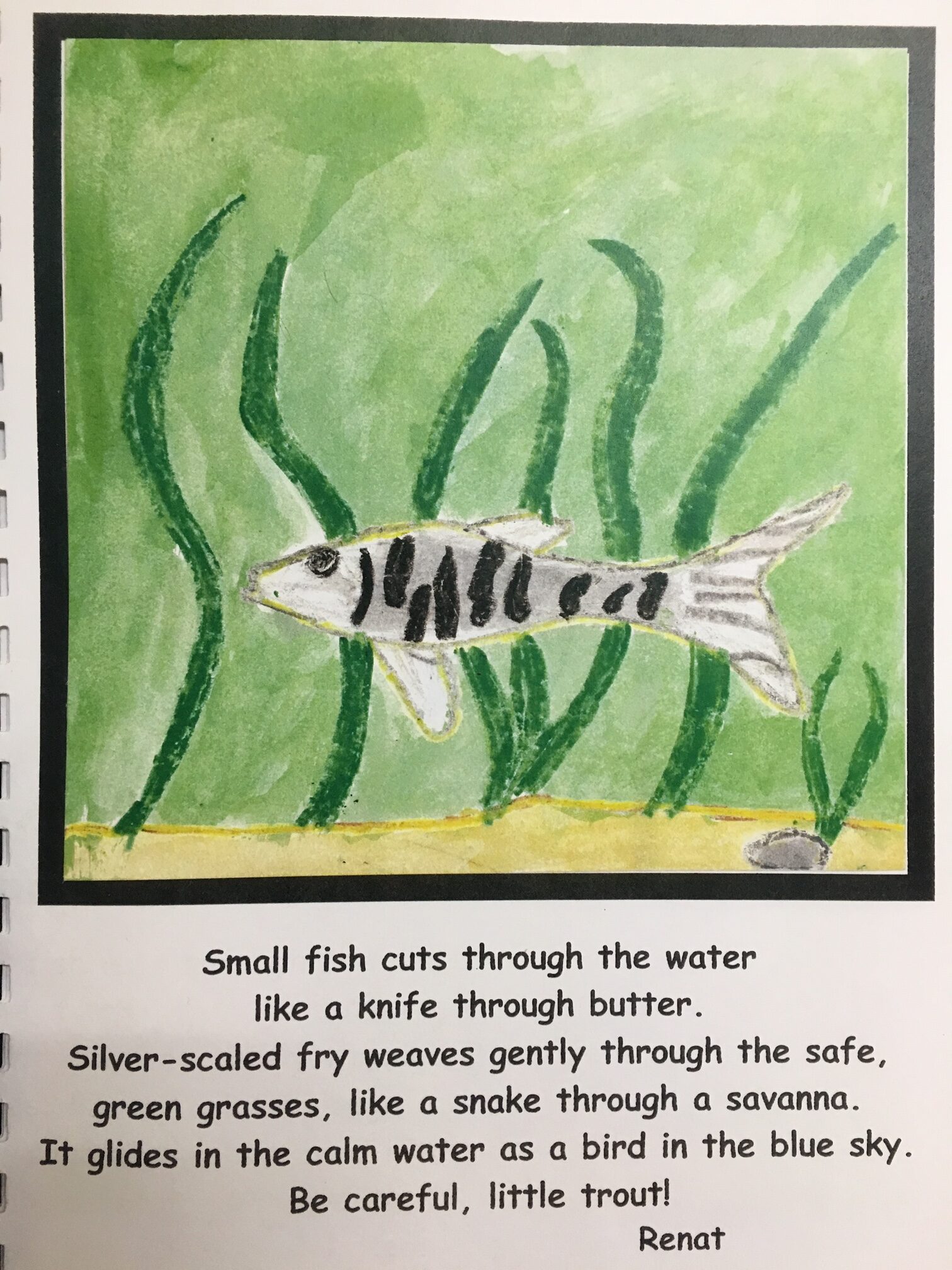
Some classes take this one step further, and create poems alongside their art. Science is tactile, visual, and also auditory. Designing and reading poems engages multiple senses and forms of expression so students can build a well-rounded connection to the program.
Connecting our Community Members
While the TIC program supports its students, it is also connecting people across the watershed. The Trout in the Classroom Blog connects our TIC teachers as they explore how to use the trout to teach many different lessons. The posts follow the development and pressing trout-related inquiries. They can also find extra materials and share their own activities in this online space. We aim to build a collaborative environment where TIC ideas can continue to grow and evolve beyond our monthly visits.
And our TIC program wouldn’t be the same without our dedicated volunteers. They give students more face-to-face time with the aquarium, focusing on water tests, equipment, and any other topic the students are curious about. Our newest volunteer, Camille, is a student volunteer who came back to her elementary school to help out after having been a teenage Youth Guide on our boat for two years in a row. We love to see this continuity of experience with our programs!
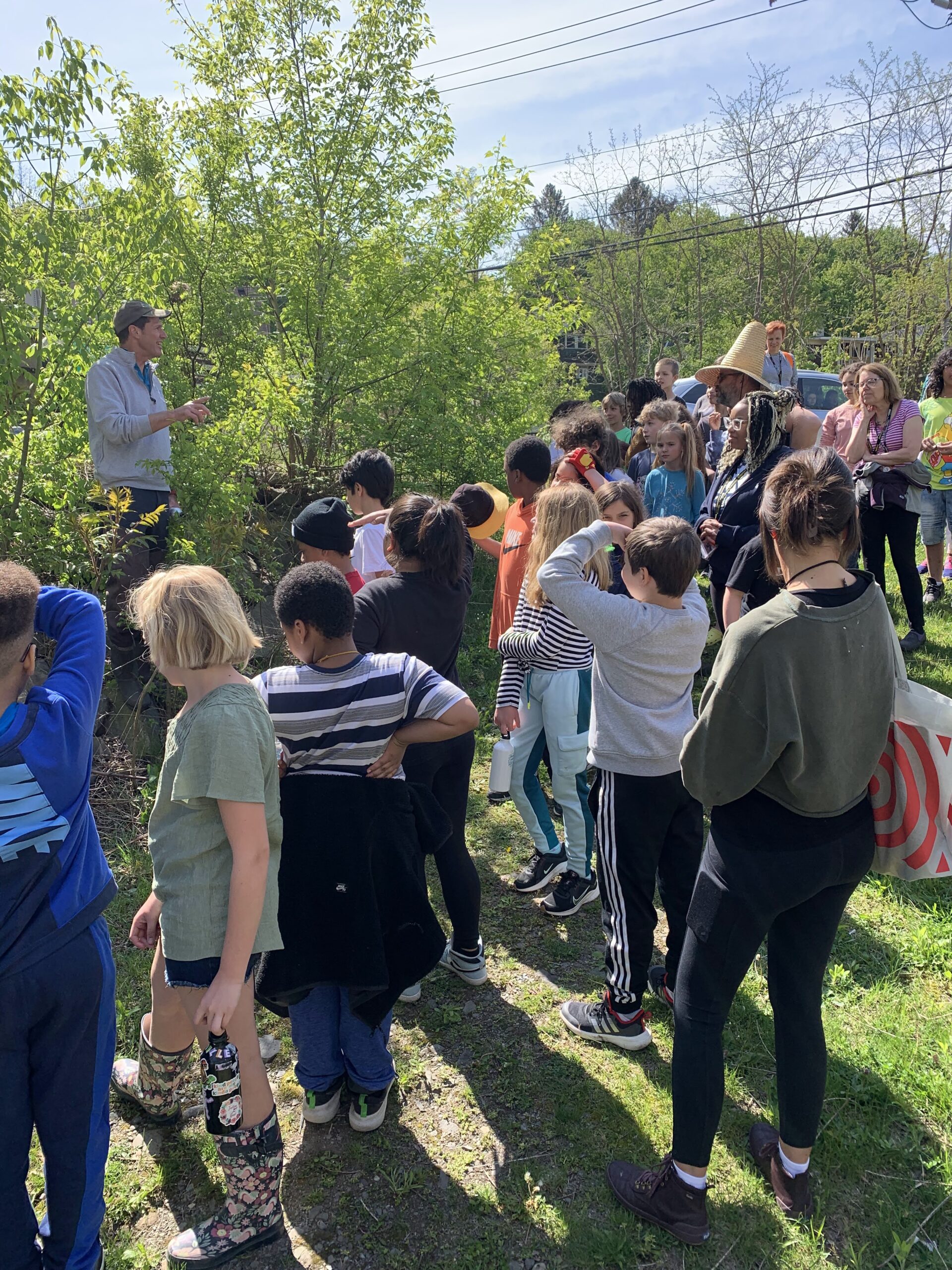
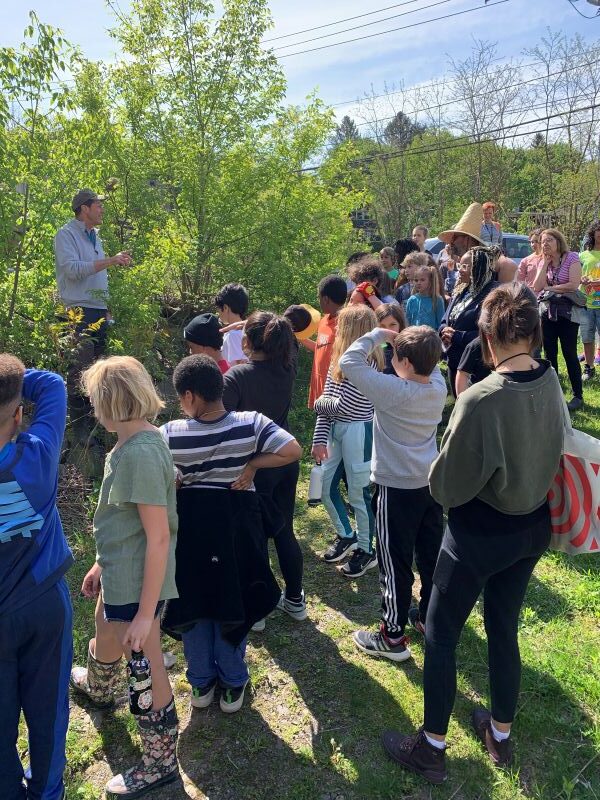
Last but certainly not least, the TIC program thrives because of the generosity and commitment of local aquarium sponsors. Sponsorship is about more than just funding. Our aquarium sponsors become part of their adopted classroom’s journey. The sponsor’s name is added to the aquarium for the year, and they receive heartfelt thank-you notes from students who share what they’ve learned about water chemistry, aquatic ecosystems, and environmental stewardship. They’re also invited to join the spring release field trips, where they can witness firsthand the impact of their generosity as students carefully release their trout into cold, clear streams like Salmon Creek, Fall Creek, Six Mile Creek, and Taughannock Creek.
Whether you are a teacher, local businesses, or watershed enthusiast, I bet you believe in the power of hands-on environmental education and we hope you’ll support what we do! Please consider sponsoring an aquarium for this year or next. Several of our schools are still looking for sponsors! You can sponsor directly on our Trout in the Classroom Page or email us for more information.
In any case, it takes a watershed to raise our trout. We need informed citizens and healthy streams. Next time you’re near a stream in the Finger Lakes, we hope you’ll take a moment to consider all the life that’s connected to it, take a deep breath and enjoy all the beauty around you!